Best AI content for blogs in 2026: Stop Using AI (Until You Read This)

Best AI content for blogs in 2026 isn’t what you think. Discover why most AI strategies fail and what actually works before you publish.
Have you ever hit “Generate” on a blog post, looked at the perfectly structured paragraphs, and felt… absolutely nothing? You’ve got a thousand words of clean text, but it feels like it was written by a ghost in a machine.
If you can’t feel the soul in your writing, do you honestly think Google’s 2026 algorithm or your readers will?
The truth is, we’ve reached a breaking point. In 2026, the internet is drowning in a sea of “good enough” content. But “good enough” is the fastest way to get buried by the new Google. If you’re using an AI content generator as a “set and forget” tool, you aren’t building an audience; you’re building a digital graveyard.
Why Most Blogs are Dying?
In 2025 and early 2026, Google rolled out a series of Core Updates that fundamentally redefined “helpfulness.” It wasn’t just about keywords anymore; it was about E-E-A-T (Experience, Expertise, Authoritativeness, and Trustworthiness).
The result? Thousands of sites that relied on a generic blog generator saw their traffic vanish overnight. Why? Because the “New Google” can now detect the lack of human effort.
The Statistic You Can’t Ignore
A recent industry report revealed that approximately 70% of all search queries in 2026 are now influenced by AI-driven search experiences. This means your content isn’t just competing with other blogs; it’s competing with Google’s own AI Overviews (SGE). If your content just repeats what’s already out there, Google will simply summarize it and never give the user a reason to click your link.

Stop Using AI as a Writer Start Using It as a Researcher
The mistake most people make with ai content tools 2026 is treating the AI as the final author. In the current landscape, your AI content generator should be your intern, not your Editor-in-Chief.
The “Dead Zone” of Pure AI Content
When you publish raw AI text, you fall into the “Dead Zone.” This is content that:
- Uses predictable sentence structures.
- Lacks personal anecdotes or real-world data.
- Fails to take a strong stand or offer a unique opinion.
- Has no internal linking to original case studies.
Google’s systems are now sophisticated enough to identify “scaled content abuse.” If you’re pumping out 50 articles a day using a blog generator without human oversight, you’re waving a red flag at the spam filters.
Understanding “Model Autophagy”
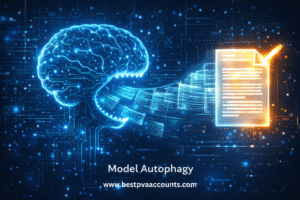
If you want to understand why AI content quality is actually declining for those who use it poorly, look at the 2025 expert paper titled “The MADness of Crowds: Model Autophagy Disorder in Large Language Models.” The research proves that when AI models are trained on content that was also generated by AI, the quality of the output begins to degrade, leading to “digital inbreeding.” This makes original human insight the most valuable and rarest commodity in SEO today.
“Content structure is the new link building. If an AI assistant can’t find, trust, and quote your specific answer, you simply don’t exist in the modern search journey.” Erika Heald, Content Marketing Institute.
The Best AI Content for blogs Tools for 2026: A Strategic Tier List
Not all AI content tools 2026 are created equal. To win this year, you need tools that understand semantic relevance and user intent.
1. The SEO Heavyweights: Jasper & Writesonic
These aren’t just wrappers for ChatGPT. Tools like Jasper and Writesonic now integrate real-time SERP data. They don’t just write; they analyze what is currently ranking and suggest ways to out-depth the competition.
2. The Workflow King: AIOSEO AI Assistant
For those running on WordPress, the AIOSEO AI Assistant has become a literal lifesaver. It lives inside your editor and helps you generate SEO-optimized titles and meta descriptions that are designed to capture the “Zero-Click” snippets that now dominate 60% of high-intent searches.
3. The Humanizer: WalterWrites
In 2026, “humanizing” your content is a mandatory step. Tools like WalterWrites focus on varying sentence rhythm and breaking the robotic symmetry that AI detectors (and Google) flag instantly.
SEO Optimizations for the LLM Era (GEO)
We are no longer just doing SEO; we are doing GEO (Generative Engine Optimization). This means writing so that AI models like Gemini, Claude, and SearchGPT want to cite you.
- Answer First: Start your sections with a direct, 1-2 sentence answer to a specific question.
- Structured Data: Use FAQ Schema and How-To Schema religiously. AI models use these as “cheat sheets” to understand your content.
- Entity-Based SEO: Focus on “entities” (specific people, places, things) rather than just broad keywords. Instead of “best shoes,” talk about “the best carbon-fiber plated marathon shoes for under-pronators.”
- Cite Your Sources: Just like AI needs to cite you, you need to cite authoritative experts. This builds the “Trust” pillar of E-E-A-T.
The Missing Link: Scaling Trust with BestPVAaccounts
You can have the best AI content generator in the world, but if your site has no “social signals,” Google will view you as a ghost. In 2026, Social SEO and traditional blog SEO are tethered together. Google looks for “brand mentions” across the web to verify if you are a real authority.
This is where BestPVAaccounts becomes your secret weapon. To compete with the giants, you need a multi-channel presence. BestPVAaccounts provides the high-quality, aged social media accounts and initial engagement signals likes, followers, and shares that tell Google’s algorithm: “This brand is real, people are talking about it, and its content deserves to rank.”
Scaling a blog in 2026 is a battle for attention. By leveraging the trusted infrastructure of BestPVAaccounts, you give your high-quality AI-human hybrid content the “authority boost” it needs to break through the noise.
Conclusion: The Future Belongs to the “Enhanced” Writer
The era of “Human vs. AI” is over. We are now in the era of the Enhanced Writer.
If you continue to use AI as a crutch to produce lazy, thin content, your site will be part of the “Great Cull.” But, if you use ai content tools 2026 to handle the research, the structure, and the data, and then inject your own unique experience and emotional truth, you will become untouchable.
The clock is ticking. Your competitors are already using these tools to outpace you. If you want fast growth and long-term authority, you must pivot your strategy today. Optimize your workflow, humanize your drafts, and use BestPVAaccounts to give your brand the social foundation it needs to thrive.
Are you ready to stop being a ghost and start being an authority?
FAQs: AI Content & SEO 2026
- Does Google penalize AI-generated content in 2026?
No, Google does not penalize content solely because it was made by AI. However, it does penalize low-value content that offers no original insight. If your AI content is “thin,” it will be de-indexed.
- What is the “Read-Aloud Test” for AI content?
It is a manual editing technique where you read your AI draft out loud. If you stumble over a sentence or it sounds like a “monotonous lecture,” it’s a sign that the rhythm is too robotic and needs human rewriting.
- Can an AI content generator help with E-E-A-T?
Only partially. It can help demonstrate Expertise (data) and Authoritativeness (structure), but the Experience (first-hand accounts) must come from you.
- How do I rank in Google’s AI Overviews?
Focus on Answer-First formatting. Provide clear, concise answers to specific questions at the top of your sections and use structured schema markup.
- How many AI-generated blogs should I post per week?
Quality beats quantity. In 2026, three “deep-dive,” human-edited, high-value posts will outperform 50 low-effort AI posts every single time.