How to Manage Facebook Account Management Safely for Social Growth in 2026?

How to Manage Facebook Account Management Safely for Social Growth in 2026?
Facebook remains an important platform for businesses, creators, marketers, communities, and individuals who want to build an online presence. However, maintaining a Facebook presence effectively requires more than simply publishing posts. Good Facebook account management involves security, content planning, audience engagement, account settings, and consistent monitoring.
Whether you manage one account or several accounts for legitimate business purposes, having a clear approach can make daily tasks easier. Learning how to manage Facebook accounts properly can also help reduce avoidable security issues and create a more consistent social media experience.
This guide explains practical Facebook account tips, Facebook management methods, Facebook account best practices, and important Facebook account settings to consider in 2026.
1. Understand Facebook Account Management
What Is Facebook Account Management?
Facebook account management is the process of maintaining and organizing activities associated with a Facebook account. It can include profile updates, content publishing, security reviews, audience engagement, privacy controls, and performance monitoring.

Effective Facebook account management starts with understanding what the account is being used for. A personal account, creator presence, business Page, or community-focused presence may require different management approaches.
When you manage Facebook accounts, the goal should be to keep activities organized, secure, useful, and consistent with Facebook’s applicable policies.
Why Effective Facebook Management Matters
Good Facebook management helps users maintain a reliable online presence without overlooking important account details. Regular management can make it easier to identify unusual login activity, update settings, respond to audiences, and maintain consistent content.For more information, review Facebook Account Security
Instead of treating Facebook account management as a one-time task, consider it an ongoing process. Small, regular checks are generally easier than trying to resolve multiple issues later.
2. Set Clear Goals for Your Facebook Accounts
Define Your Social Media Objectives
Before you manage Facebook accounts, decide what you want to achieve. Your objective could be increasing brand awareness, sharing educational content, building a community, communicating with customers, or developing a creator presence.
Clear objectives make Facebook account management more focused. They also help determine what type of content should be published and which performance indicators matter most.
For example, an organization focused on customer communication may prioritize messages and comments, while a creator may focus more heavily on content engagement.For additional guidance on planning your presence, review Meta for Business.
Choose the Right Content Strategy
A simple content strategy can make Facebook management easier. Consider creating a schedule that includes different content formats and topics relevant to your audience.
Avoid publishing content simply to maintain activity. Quality, relevance, and consistency are more useful foundations for long-term Facebook account management.
3. Use the Right Facebook Account Settings
Review Privacy and Security Settings
One of the most important areas of Facebook account management is reviewing available privacy and security controls. Facebook account settings allow users to control various aspects of their account experience.
Review settings periodically and make sure they reflect your current preferences. Pay particular attention to login security, privacy options, connected devices, and account recovery information.
Understanding your Facebook account settings can help you make informed decisions instead of leaving important controls unchanged.
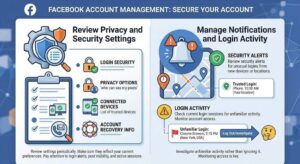
Manage Notifications and Login Activity
Notifications can provide useful information about account activity. During regular Facebook account management, review security alerts and login activity when available.
If something looks unfamiliar, investigate it rather than ignoring it. Monitoring account access is an important part of responsible Facebook management.
4. Follow Facebook Account Best Practices
Keep Account Information Updated
Keeping relevant account information accurate can simplify ongoing Facebook account management. Review profile details, contact information, and other important information periodically.
Outdated information may make account administration more difficult. Regular reviews are therefore among the simplest Facebook account best practices to follow.
Use Strong Security Measures
Security should always be part of your Facebook account best practices. Use strong, unique passwords and take advantage of security features offered by Facebook where appropriate.
Do not share passwords unnecessarily, and be cautious when receiving unexpected login links or account-related messages.
Strong security habits support safer Facebook account management and can reduce the risk of unauthorized access.
5. Manage Facebook Accounts Efficiently
Organize Your Daily Facebook Activities
If you manage Facebook accounts regularly, create a simple routine. Set aside time for content planning, comments, messages, notifications, and security reviews.
A consistent routine can make Facebook account management less overwhelming. Instead of checking everything randomly, divide tasks into daily, weekly, and monthly activities.
For example, daily activities might include reviewing notifications and responding to relevant interactions. Weekly activities could include reviewing content performance, while monthly activities could involve a broader security and settings review.
Monitor Content and Engagement
Effective Facebook management includes understanding how audiences respond to content. Monitor meaningful engagement and identify which topics generate useful conversations.
The purpose is not simply to increase numbers. Reviewing engagement can help you understand audience interests and improve future content.
6. Apply Useful Facebook Account Tips
Maintain Consistent Posting
One of the most practical Facebook account tips is to maintain a realistic publishing schedule. Consistency can help audiences understand when to expect new content.
Your schedule should be manageable rather than excessive. Sustainable publishing is usually easier to maintain as part of long-term Facebook account management.
Respond to Comments and Messages
Communication is another important part of Facebook account management. Responding to genuine questions and comments can help maintain relationships with your audience.
When you manage Facebook accounts, consider setting aside specific periods for responding to messages and comments. This keeps communication organized without allowing it to interfere with every other task.
7. Protect Your Facebook Accounts
Enable Available Security Features
Security features should form a central part of your Facebook account best practices. Where available and appropriate, consider using additional verification and login protection options.
Regularly reviewing security controls is an important Facebook account tip, particularly when an account is used for professional or business-related activities.
Monitor Account Access
Another important part of Facebook management is monitoring who can access accounts or related business assets. Review access permissions regularly and remove access that is no longer required.
Good access management can make Facebook account management more organized and reduce unnecessary exposure.
8. Avoid Common Facebook Management Mistakes
Do Not Ignore Security Alerts
Ignoring security notifications can create unnecessary problems. During routine Facebook account management, take unfamiliar alerts seriously and review them through Facebook’s official account controls.
Security awareness is one of the most important Facebook account best practices because prevention is generally easier than recovering from an account problem.
Avoid Excessive or Repetitive Activity
When you manage Facebook accounts, avoid behavior that looks unusual, misleading, or excessively repetitive. Automated or aggressive activity can create account-quality and security concerns.
A more natural and responsible approach supports sustainable Facebook management. Always follow the platform’s applicable rules rather than assuming account age or history provides an exception.
9. Review Facebook Account Performance
Monitor Engagement Metrics
Performance reviews are useful in Facebook account management because they show whether your content strategy is working toward your goals.
Depending on the type of presence you operate, useful indicators may include reach, engagement, interactions, audience response, and content performance.
Identify Content That Performs Well
Reviewing successful content can provide useful Facebook account tips for future planning. Look for recurring topics, formats, or messages that receive meaningful audience responses.
The objective is not to copy every successful post but to understand what your audience finds valuable.
10. Build a Sustainable Facebook Management Strategy
Create a Consistent Management Routine
A sustainable routine makes Facebook account management easier over time. Create a checklist covering content, engagement, security, account access, and Facebook account settings.
Breaking larger tasks into smaller routines can help prevent important responsibilities from being forgotten.
Focus on Long-Term Social Growth
Successful social growth usually requires patience and consistency. Facebook account management should therefore focus on building a reliable presence rather than chasing short-term results.
Use the Facebook account tips discussed in this guide as a foundation, then adjust your approach based on your audience, objectives, and performance data.
Frequently Asked Questions About Facebook Account Management
1. What is Facebook account management?
Facebook account management involves maintaining account information, security, content, engagement, settings, and other account-related activities in an organized way.
2. How can I manage Facebook accounts effectively?
To manage Facebook accounts effectively, establish clear goals, maintain consistent content, review security settings, monitor engagement, and regularly check account access.
3. What are the most important Facebook account tips?
Important Facebook account tips include using strong security practices, reviewing account settings, maintaining consistent content, monitoring activity, and responding appropriately to audiences.
4. Which Facebook account settings should I review?
Important Facebook account settings may include privacy, security, login activity, notifications, account access, and recovery-related controls.
5. Why are Facebook account best practices important?
Facebook account best practices provide a structured approach to security, content management, audience communication, and responsible platform use.
6. How often should I review my Facebook account?
Regular reviews are useful. You can monitor basic activity frequently while conducting more detailed security, access, and settings checks periodically.
7. Can Facebook management improve social growth?
Effective Facebook management can support social growth by helping you maintain consistent content, understand audience engagement, and improve your overall strategy.
8. What should I avoid when managing Facebook accounts?
Avoid suspicious behavior, excessive repetitive activity, weak security practices, unnecessary sharing of account credentials, and activities that violate Facebook’s rules.
Conclusion
Effective Facebook account management is about creating a structured, secure, and consistent approach to using Facebook. From reviewing Facebook account settings and applying Facebook account best practices to maintaining content and monitoring engagement, every part of management contributes to a stronger online presence.
If you want to manage Facebook accounts successfully in 2026, focus on clear goals, responsible activity, security awareness, consistent communication, and regular performance reviews. By applying practical Facebook account tips and maintaining good Facebook management habits, you can build a more organized approach to long-term social growth.