Gmail Account Management: 10 Best Practices for Better Organization

Gmail Account Management: 10 Best Practices for Better Organization
Managing an email account effectively is important for communication, productivity, organization, and online security. Gmail account management involves organizing messages, reviewing account settings, maintaining recovery information, protecting the account, and regularly checking activity. Good Gmail account management can make an inbox easier to use while reducing the risk of missed emails, unwanted messages, and unauthorized access.
Whether you use Gmail for personal communication, education, business, or professional activities, following practical Gmail best practices can help you maintain a cleaner and more secure account. This guide explains how to manage Gmail account settings, improve Gmail account organization, and apply useful Gmail management tips.
What Is Gmail Account Management?
Gmail account management refers to the regular process of maintaining and organizing a Gmail account. It includes managing emails, folders and labels, filters, contacts, account settings, recovery options, security features, and connected services.
Effective Gmail account management is more than simply deleting old emails. It means creating an organized system that helps you find important messages quickly and keeps unnecessary information under control.
A good Gmail account management routine may include:
- Organizing emails with labels and categories.
- Archiving messages that are no longer needed in the inbox.
- Deleting unwanted emails and emptying the trash when appropriate.
- Managing spam and promotional messages.
- Reviewing Gmail account settings.
- Updating recovery information.
- Checking security and account activity.
- Removing unnecessary third-party access.
- Using strong authentication and security practices.
These activities form the foundation of effective Gmail account organization.
Organizing Gmail
One of the most important parts of Gmail account management is keeping your inbox organized. A disorganized inbox can make it difficult to identify important emails and may reduce productivity.
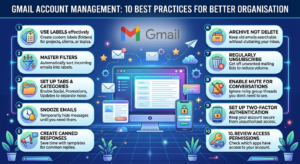
Use Labels
Gmail labels can help categorize messages according to their purpose. You can create labels such as Work, Personal, Finance, Education, Important, Projects, or Receipts.
Using labels consistently is one of the most useful Gmail management tips because it allows you to group related emails without relying only on the inbox.
Archive Completed Emails
If an email no longer requires immediate attention but you may need it later, consider archiving it. Archiving removes the message from the inbox while keeping it available through Gmail search.
This simple approach can improve Gmail account organization without permanently deleting useful information.
Delete Unnecessary Messages
Regularly review unwanted messages and delete those you no longer need. Pay particular attention to newsletters, promotional messages, duplicate emails, and outdated notifications.
A regular cleanup routine is an essential part of Gmail best practices.
Use Search Efficiently
Gmail’s search functionality can help you locate messages without manually browsing through hundreds of emails. Search by sender, subject, date, keywords, attachments, or other available criteria.
Efficient searching is an important part of Gmail account management because it reduces the time spent looking for specific information.
Account Settings
Reviewing Gmail account settings is another important part of managing your account. Settings determine how Gmail handles messages, notifications, forwarding, signatures, filters, and other account functions.
Check your settings periodically and make sure they reflect your current requirements.
Important areas to review include:
- General settings
- Accounts and import
- Filters and blocked addresses
- Forwarding and POP/IMAP settings
- Signature settings
- Notifications
- Spam and blocked senders
- Inbox configuration
Understanding Gmail account settings can help you customize Gmail while avoiding unnecessary configuration problems.
When changing settings, review each option carefully. Unnecessary forwarding rules, unfamiliar filters, or unexpected account configurations may create privacy or communication concerns.
Recovery Information
Recovery information is a key component of Gmail account management. It can help you regain access if you forget your password or encounter an account access problem.Keep your recovery phone number and recovery email address current. If your recovery information is outdated, account recovery may become more difficult.
As part of your Gmail best practices, periodically check whether your recovery information is still accurate.You should also avoid sharing passwords or recovery codes with other people. Treat recovery information as confidential account-security information.
Security Best Practices
Security should be a major priority when you manage Gmail account settings and activities. A secure Gmail account reduces the possibility of unauthorized access and helps protect personal and professional information.
Use a Strong Password
Use a strong, unique password for your Google Account. Avoid using easily guessed information such as names, birthdays, phone numbers, or simple sequences.
Do not reuse the same password across multiple important services.
Enable Two-Step Verification
Two-step verification adds an additional layer of protection to your account. Even if someone obtains your password, an additional verification step can make unauthorized access more difficult.
Including two-step verification in your Gmail account management routine is an important security practice.
Review Account Activity
Regularly review recent account activity and security events. If you notice an unfamiliar sign-in or security change, investigate it promptly and take appropriate action.
Check Third-Party Access
Some websites and applications may request access to your Google Account. Review connected services periodically and remove access for services you no longer use or recognize.
Security reviews should be part of your ongoing Gmail management tips rather than something you do only after a security problem occurs.
Common Mistakes
Even users who regularly manage their Gmail accounts can make avoidable mistakes. Recognizing common problems can improve overall Gmail account management.
Ignoring an Unorganized Inbox
Allowing thousands of emails to accumulate without labels, categories, or regular cleanup can make important messages difficult to find.
Using Weak Passwords
Simple or reused passwords can increase security risks. Use a unique and strong password instead.
Ignoring Recovery Information
Outdated recovery details may create problems when you need to verify ownership of your account.
Keeping Unused Connected Apps
Old applications may retain account permissions even after you stop using them. Review third-party access regularly.
Ignoring Spam
Spam messages can clutter your inbox and make legitimate communication harder to identify. Use Gmail’s spam controls and report unwanted messages appropriately.
Making Unnecessary Settings Changes
Changing Gmail account settings without understanding their purpose can affect forwarding, filters, notifications, or message handling. Review changes carefully before saving them.
Gmail Management Checklist
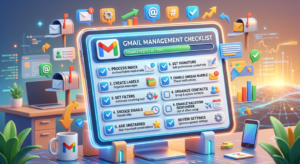
A simple checklist can make Gmail account management easier to maintain.
Review and organize important emails.
Apply useful labels to messages.
Archive completed conversations.
Delete unnecessary emails.
Review spam and promotional messages.
Check important Gmail account settings.
Confirm recovery information is current.
Review recent security activity.
Maintain a strong, unique password.
Enable two-step verification.
Review third-party account access.
Remove unnecessary filters or forwarding rules.
Repeat the review regularly.
Following this Gmail management checklist can make account maintenance more consistent and effective.
Gmail Account Organization Tips for Better Productivity
Good Gmail account organization can save time throughout the day. Instead of checking every message repeatedly, create a simple system for handling emails.
For example, you can separate messages into categories such as action required, waiting for a response, reference, and completed. Labels and filters can help automate parts of this process.
Another useful Gmail management tip is to prioritize important emails rather than treating every message as equally urgent.
You can also create filters for recurring messages, newsletters, or specific senders. Filters can automatically apply labels or perform other actions based on your chosen criteria.
The goal of Gmail account management should be a system that is easy to maintain. A complicated system may become difficult to follow over time, so focus on simple and consistent organization.
Gmail Best Practices for Long-Term Management
Successful Gmail account management is an ongoing process rather than a one-time task. Establish a regular routine for reviewing your inbox, account settings, security information, and recovery options.
For example, you can perform a quick inbox review regularly and conduct a more detailed security and settings review periodically.
Long-term Gmail best practices include:
- Keep your inbox organized.
- Use labels consistently.
- Remove unnecessary emails.
- Review account settings.
- Maintain updated recovery information.
- Use strong authentication.
- Check account activity.
- Review third-party access.
- Avoid sharing account credentials.
- Keep your Gmail organization system simple.
These practices can help you manage Gmail account activities efficiently while supporting better security and productivity.
Frequently Asked Questions
What does Gmail account management mean?
Gmail account management means maintaining your Gmail account through email organization, account settings, recovery information, security controls, filters, labels, and regular account reviews.
How can I manage my Gmail account better?
To manage Gmail account activities effectively, organize emails with labels, archive completed conversations, remove unnecessary messages, review Gmail account settings, maintain recovery information, and regularly check security activity.
What are the best Gmail management tips?
Useful Gmail management tips include using labels, filters, search tools, archiving completed emails, cleaning unwanted messages, checking security activity, and reviewing connected applications.
Why is Gmail account organization important?
Gmail account organization makes it easier to find important messages, manage communication, reduce inbox clutter, and improve productivity.
How often should I review Gmail account settings?
Review Gmail account settings periodically and whenever your communication, security, recovery, or account requirements change.
What are important Gmail best practices?
Important Gmail best practices include using a strong unique password, enabling two-step verification, keeping recovery information updated, reviewing account activity, managing third-party access, and maintaining an organized inbox.
Conclusion
Effective Gmail account management combines organization, security, account maintenance, and regular reviews. By using labels, filters, search tools, and archiving, you can improve Gmail account organization and reduce inbox clutter. Reviewing Gmail account settings, maintaining recovery information, and following security practices can further strengthen your account-management routine.
The most effective approach is to make these activities part of your regular digital routine. With consistent Gmail management tips and practical Gmail best practices, you can keep your account organized, easier to manage, and better protected.