Gmail Account Security in 2026: 9 Essential Ways to Protect Your Account

Gmail Account Security in 2026: 9 Essential Ways to Protect Your Account
Gmail account security has become increasingly important as email continues to be used for personal communication, online accounts, financial notifications, work, education, and important documents. A compromised Gmail account can potentially expose more than just messages because a Google Account may be connected to other services and applications.
The good news is that improving Gmail account security does not require advanced technical knowledge. A few sensible habits, combined with Google’s built-in security features, can significantly reduce common account risks.
Whether you use Gmail occasionally or depend on it every day, understanding basic Gmail security practices can help you protect your information. This guide explains nine practical ways to strengthen your account, identify potential risks, and maintain better protection throughout 2026.
What Is Gmail Account Security?
Gmail account security refers to the practices and settings used to protect your Gmail and Google Account from unauthorized access, phishing, stolen credentials, suspicious applications, and other threats.
Your Gmail account can contain personal conversations, documents, contact information, booking details, receipts, and password-reset messages from other services. For that reason, Gmail account security should be treated as an ongoing responsibility rather than something you check only after a problem occurs.
Google provides several security features that allow users to review sign-in activity, manage devices, strengthen authentication, and control access granted to third-party applications.
Why Gmail Security Matters
Strong Gmail security helps reduce the chance that another person can gain access to your account.
A compromised mailbox can be particularly troublesome because attackers may attempt to reset passwords for other services using your email address. They may also send deceptive messages to your contacts or search your inbox for sensitive information.
Taking a few minutes to review your Gmail account security settings regularly can therefore be worthwhile.
Common Gmail Security Risks
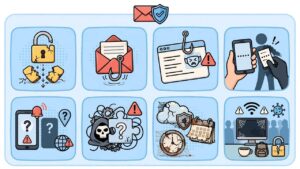
Some of the most common risks include:
- Reused or weak passwords
- Phishing messages
- Fake login pages
- Stolen verification codes
- Unrecognized devices
- Suspicious third-party applications
- Outdated recovery information
- Unsafe public or shared devices
Recognizing these risks is an important first step toward better Gmail account security.
9 Essential Ways to Improve Gmail Account Security
1. Create a Strong and Unique Password
A strong password remains one of the foundations of Gmail account security.
Avoid using easily guessed information such as your name, birthday, phone number, or simple sequences. More importantly, avoid using the same password across multiple websites.
If another service experiences a data breach and your password has been reused, attackers may try those credentials elsewhere.
For better Gmail security, use a long, unique password that is difficult to guess. A reputable password manager can also make it easier to maintain different passwords without memorizing every one.
2. Enable Two-Step Verification
Two-step verification adds another layer of protection to your Google Account.
Instead of relying only on your password, Google can require an additional verification method when appropriate. This can make unauthorized access considerably more difficult if someone obtains your password.
For anyone serious about Gmail account security, enabling two-step verification is one of the most useful steps available.
You should also understand how your chosen verification methods work and keep your recovery options up to date.
3. Review Your Recovery Information
Recovery information can help you regain access if you forget your password or encounter an account problem.
Check whether your recovery email address and phone number are current and belong to you. Old phone numbers or email addresses should not remain connected unnecessarily.
Maintaining accurate recovery information is an important part of Gmail account security because recovery methods can become especially important during an account emergency.
Review these details periodically rather than waiting until you lose access.
4. Check Recent Account Activity
Regularly checking your account activity can help you notice unusual sign-ins.
If you see activity that you do not recognize, investigate it promptly. Location information may not always be exact because networks, mobile connections, and VPNs can affect how activity is displayed, so consider the complete context rather than relying on location alone.
Good Gmail security involves paying attention to unexpected activity instead of ignoring unfamiliar notifications.
If you believe someone has accessed your account, change your password and review security settings immediately.
5. Manage Connected Devices
Your Google Account may be signed in on computers, smartphones, tablets, or other devices.
Review the devices associated with your account and remove access from devices you no longer use or do not recognize.
This is a simple but valuable part of Gmail account security. An old laptop, shared computer, or previously used phone should not necessarily retain access indefinitely.
When replacing a device, remember to review your account sessions as part of the transition.
6. Review Third-Party App Access
Over time, users may grant applications access to their Google Account for different reasons.
Some permissions may no longer be necessary. Reviewing connected applications allows you to identify services you no longer use and remove access where appropriate.
This can strengthen Gmail account security by reducing the number of external services connected to your account.
Before granting permission to an application, consider whether you trust the developer and whether the requested access makes sense for the service.
7. Watch for Phishing Emails
Phishing remains one of the most common ways criminals attempt to obtain account credentials.
A phishing message may imitate a legitimate company and create a sense of urgency. It might claim that your account is about to be suspended or that you need to verify payment information.
Good Gmail security requires caution when handling unexpected messages.
Before clicking a link, examine the sender, message context, and destination. Be particularly careful when a message asks for passwords, verification codes, financial information, or immediate action.
Remember that legitimate-looking branding does not necessarily prove that a message is genuine.
8. Keep Your Devices and Browser Updated
Your Gmail account is only as secure as the environment you use to access it.
Keep your operating system, browser, and security software updated. Software updates often include security fixes that address known vulnerabilities.
Using current software supports better overall Gmail account security and reduces avoidable risks.
You should also avoid signing into your Gmail account on devices you do not trust. If you must use a shared computer, take extra care to sign out afterward and avoid saving sensitive credentials.
9. Review Gmail Security Settings Regularly
Security is not a one-time task.
Your phone number may change, you may purchase a new computer, or you may stop using an application that still has account access. Regular reviews help ensure that your settings continue to match your current situation.
Set a reminder to review your Gmail account security periodically. Check your password, authentication methods, recovery information, connected devices, and third-party access.
A regular review can help identify small issues before they become larger problems.If you have difficulty accessing your account or need additional guidance, consult Google Account Help for official instructions.
How to Check Your Gmail Security Settings
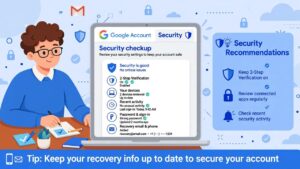
One of the easiest ways to maintain Gmail account security is to use Google’s official Account Security tools.
Review Your Google Account Security Page
Google provides a dedicated security area where users can review important account settings.
Look for security recommendations, recent activity, devices, authentication methods, and other account-protection information.
Instead of waiting for an unusual event, make security reviews part of your normal digital routine.
Check Password and Sign-In Activity
Review when and where your account has been accessed. If something appears unfamiliar, investigate before dismissing it.
Changing your password can be appropriate when you suspect that your credentials have been exposed.
Review Recovery Options
Make sure your recovery email and phone information remain accurate.
This simple check can make account recovery easier while also helping you identify outdated information that should be removed.
Gmail Security Features You Should Know
Understanding available security features can make Gmail account security easier to manage.
Two-Step Verification
Two-step verification provides an additional authentication layer beyond your password.
Security Alerts
Google may notify you when it detects certain security-related events. Pay attention to these alerts and investigate anything you do not recognize.
Recovery Email and Phone
Recovery options can help you regain access when you cannot sign in normally.
Passkeys and Other Sign-In Options
Modern authentication methods can provide alternatives to traditional password-based sign-in. Review the options available for your account and select methods appropriate for your circumstances.
Common Gmail Security Mistakes to Avoid
Even users who understand Gmail account security can make simple mistakes.
Reusing Passwords
Using one password everywhere increases the potential impact of a breach.
Clicking Suspicious Links
Unexpected links should be treated cautiously, especially when they request login details.
Sharing Verification Codes
Never casually share authentication or verification codes with another person. A legitimate support representative should not need you to disclose private security codes through an unsolicited message.
Ignoring Security Alerts
If Google sends an unexpected security notification, do not simply dismiss it. Check your account activity and determine whether the event was legitimate.
Gmail Account Security for Business Users
Businesses should take Gmail account security particularly seriously because company email can contain confidential documents, customer communications, invoices, contracts, and internal information.
Protecting Business Email
Employees should use strong authentication and follow company security procedures.
Managing Account Access
Organizations should regularly review who has access to business accounts and systems.
Employee Security Awareness
Staff should be trained to recognize phishing, suspicious attachments, fraudulent requests, and social-engineering attempts.
A technically strong system can still be undermined by a user who unknowingly provides credentials to a fraudulent website.
Gmail Account Security Checklist
Use this quick checklist when reviewing your Gmail account security. Regularly reviewing Google Account Security settings can help you identify suspicious activity and strengthen your account protection.
- Use a unique and strong password
- Enable two-step verification
- Confirm recovery information
- Review recent account activity
- Check connected devices
- Remove unnecessary third-party access
- Be cautious with unexpected emails
- Keep your browser and devices updated
- Review security settings regularly
- Respond promptly to suspicious activity
Keeping this checklist handy can make routine Gmail security reviews much easier.
Frequently Asked Questions
How can I improve Gmail account security?
Start with a strong unique password and enable two-step verification. Then review recovery information, connected devices, account activity, and third-party access.
Is two-step verification necessary for Gmail?
It is strongly recommended because it adds an additional layer of protection beyond your password.
How do I know if someone accessed my Gmail?
Review recent account activity and Google security notifications. If you notice something suspicious, secure the account promptly.
How often should I review Gmail security settings?
There is no single schedule that works for everyone, but reviewing your settings periodically and whenever your devices, phone number, or account usage changes is a good practice.
What should I do if my Gmail account is compromised?
Take immediate steps to secure the account, including changing your password, reviewing recovery information, checking connected devices, and examining recent activity.
Conclusion
Good Gmail account security is built through several small but important habits rather than one single setting. A strong password, additional authentication, updated recovery information, careful email handling, and regular security reviews can all contribute to better protection.
Your Gmail account may connect to many parts of your digital life, which makes protecting it especially important. Even if you have never experienced a security issue, preventive action is still worthwhile.
Make Gmail account security part of your regular digital maintenance. Review your settings, remove access that you no longer need, keep your devices updated, and remain cautious about unexpected requests.
Most importantly, avoid assuming that a familiar-looking email or website is automatically trustworthy. A few seconds of careful checking can sometimes prevent a much larger problem.
By following these practical Gmail security habits throughout 2026, you can create a stronger security routine and reduce many common risks associated with unauthorized account access.